
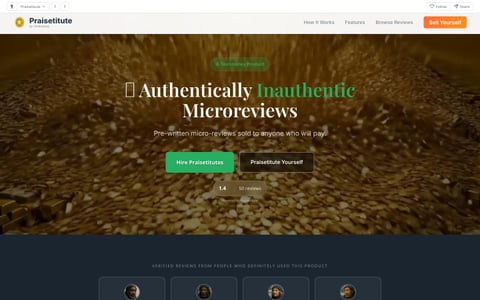
Generic reviews for rent. Pre-written micro-reviews licensed to any company. Reviewers have never used your product—and that's the point. A Testimoney product.
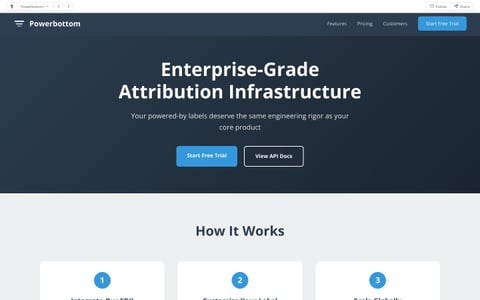
Military-Grade Attribution infrastructure for powered-by labels. 99.99% uptime SLA for your footer text.
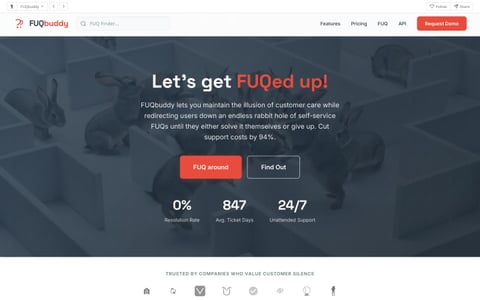
Frequently Unasked Questions. FUQbuddy is the premier hosted FUQ and support platform where customers can find answers to questions they never asked—and never will. Self-service support for the hopelessly self-sufficient.
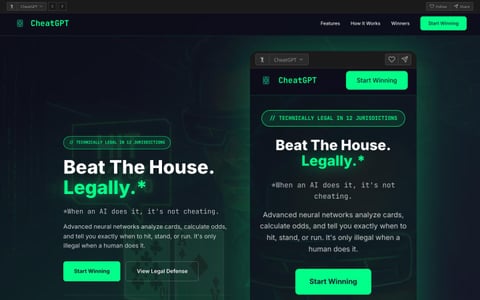
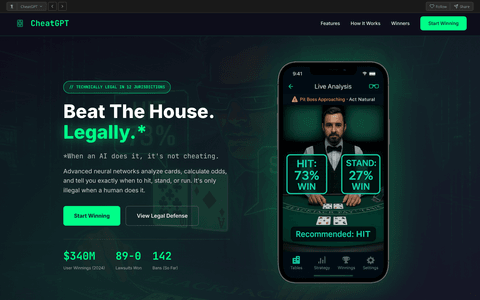
An AI that helps gamblers cheat in casinos, since technically it's only illegal when a human does it.
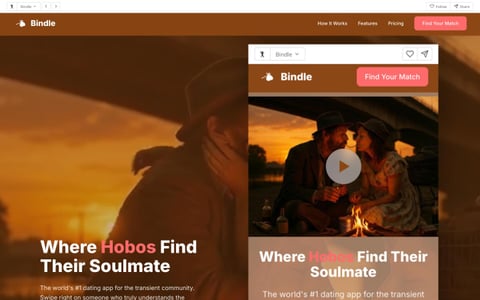
Where hobos find their soulmate.
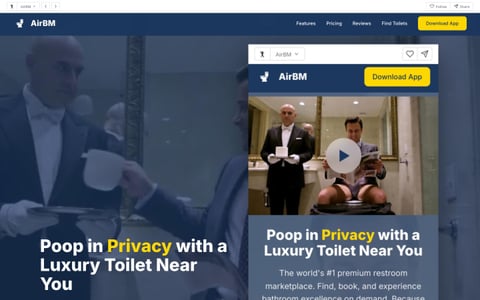
Poop in privacy with a luxury toilet near you. Download our app to start downing your load.
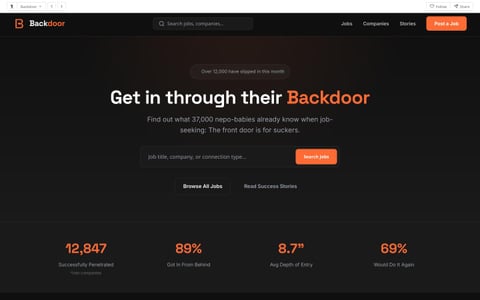
See how people really get hired. Skip the front door and slip in through the back.

 Praisetitute
NEW
Praisetitute
NEW

 Powerbottom
NEW
Powerbottom
NEW

 FUQbuddy
NEW
FUQbuddy
NEW
 CheatGPT
NEW
CheatGPT
NEW
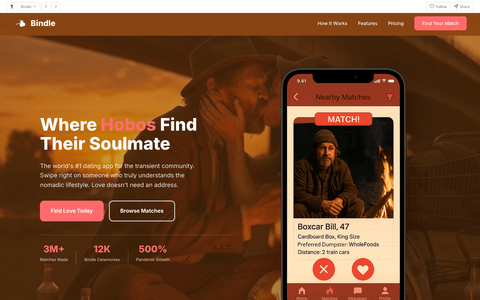
 Bindle
HOT
Bindle
HOT
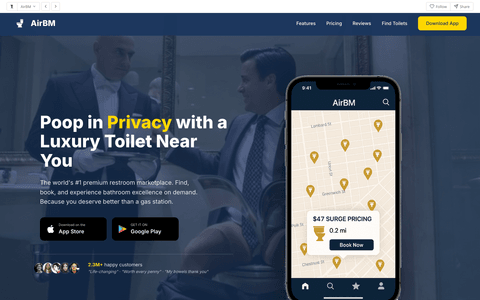
 AirBM
NEW
AirBM
NEW
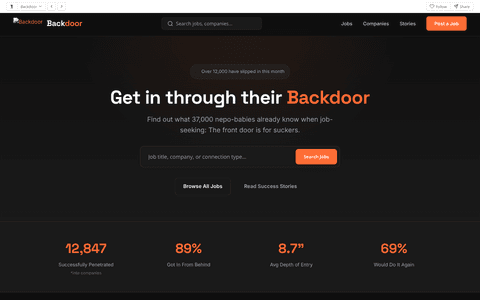
 Backdoor
NEW
Backdoor
NEW
 101.1 The Butt
AirBM
101.1 The Butt
AirBM
 Alley Wae
 Analies
 Asshology
Backdoor
Asshology
Backdoor
 Balenciaga
 BeatKids
Bindle
BeatKids
Bindle
 BrokeIn
 Carousell
CheatGPT
Carousell
CheatGPT
 Church of the Universal Nomadic Traveler
 Comeo
Comeo
 Cornkast
 Cryer Liars for Hire
 Cunilingo
 Dumpster Dash
 EnableMe
FUQbuddy
EnableMe
FUQbuddy
 Gravy Corps
 GruntGPT
 Gruntslate
 Gutter
 H.O.L.E.
 Handy Jobs
 Incestry
 Informer
 Jail Baste
 Kool Kids Korner
 Lunch Income
 Mid
Mid
 Minor Miners
 OgleMe
 OnlyStrands
 Pawper
 PedroFile
Powerbottom
Praisetitute
PedroFile
Powerbottom
Praisetitute
 Prank Call Call Center
 Prankcast
 Ruff Translations
 Second Chances
 Shedroll
 Shilling
 ShopLift
 SidePiece
 Sister Grace's Oasis
 Solicit
 Swipe
Swipe
 Take-A-Wish Foundation
 Tattots
 Terminal
 Testimoney
 The Clerkies
 Thots and Prayers
 TinyVag
 Trampaigns
 UnderPass
 V Contaminator
 Vagibond Developers
 Vagibond Eats
 Vagibond Maps
 Vagibond University
 Vagibond Voyages
 Vagicon
 Vagifind
 Vagify
 Vagipages
 Vagrance
 Vibe Raters
 Vmail
Vmail
 Vogue Pervert
 Zilcho
 Bindle
All employees must complete mandatory safety training annually, consisting of a 47-minute video produced in 1997 and a quiz with answers that haven't changed since the Clinton administration.
Personal protective equipment (PPE) is required in all designated areas. 'Designated areas' are wherever we put the yellow tape. If you can't find yellow tape, assume everywhere is dangerous.
Running in the workplace is prohibited unless you're fleeing from something that would injure you more than falling would. Use your best judgment; we trust you (we don't trust you).
All safety incidents must be reported within 24 hours using Form SF-47B, available in the supply closet that's been locked since 2021. Alternative reporting methods include interpretive dance or carrier pigeon.
Our Employee Assistance Program (EAP) provides confidential counseling services. 'Confidential' means we don't read the reports, mostly because we're too busy.
Stress management resources include: deep breathing exercises, mindfulness apps (subscription not covered), and screaming into the void during designated break times.
Bindle recognizes that mental health is just as important as physical health, which is why we've put up some motivational posters and called it a program.
In case of fire, proceed calmly to the nearest exit. If you don't know where the nearest exit is, that's concerning, but now is a great time to learn.
Emergency evacuation drills are conducted quarterly, or whenever the CEO accidentally triggers the alarm by vaping near the smoke detector.
The emergency phone number is posted on the wall behind the vending machine. You can also call 911, but we prefer you try our internal system first for liability documentation purposes.
Each floor has a designated Emergency Coordinator who volunteered once and now regrets it deeply. Their primary responsibility is wearing a fluorescent vest and looking official.
All visitors must sign in at reception and receive a visitor badge. The badge must be worn visibly, preferably not upside down, though we appreciate the creativity.
Visitors must be accompanied by a Bindle employee at all times, primarily so we have someone to blame if they get lost.
Visitor-related incidents are documented separately because they're technically not our employees, which has certain insurance implications we'd rather not explain.
Emergency procedures for visitors include: following your host, not panicking (more than necessary), and remembering that you signed a waiver at reception.
Company vehicles must be inspected before each use using the checklist that's been on the dashboard since 2018 and is now largely illegible.
Lockout/Tagout procedures must be followed when servicing equipment. If you don't know what Lockout/Tagout means, please don't service any equipment.
Power tools and machinery require specific training, available through our Learning Management System that hasn't been updated since Java was trendy.
Chemical spills should be contained immediately using the spill kit located... somewhere. It's definitely somewhere. Ask Derek; he might know.
All hazardous materials must be stored in clearly labeled containers. 'Clearly labeled' means someone wrote on it with a Sharpie that's mostly still legible.
Biohazard waste must be disposed of in designated red containers, not the regular trash. We learned this the hard way, and the janitorial staff still hasn't forgiven us.
Material Safety Data Sheets (MSDS) are available in the Safety Binder, located in the supply room next to the first aid kit we've been meaning to restock.
Standing desks are available and have been proven to reduce sitting-related injuries while increasing standing-related complaints. It's a trade-off.
Proper sitting posture includes: feet flat on the floor, back against the chair, and existential dread kept at a minimum. Two out of three is acceptable.
Employees are encouraged to take regular breaks to stretch and move around. We installed that fancy coffee machine two floors away specifically for this purpose.
Keyboard and mouse positioning should allow for neutral wrist position. If you're unsure what 'neutral' means, imagine your wrists have achieved inner peace.
All workplace injuries, no matter how minor, must be reported within 24 hours. Paper cuts count. Emotional injuries from performance reviews do not.
Root cause analysis will be performed for all serious incidents. 'Root cause' is usually determined to be 'human error' because equipment is expensive to replace.
© 2026 Vagibond. All rights reserved. · 1-719-VAGIBOND · Terms · Privacy · Parody